
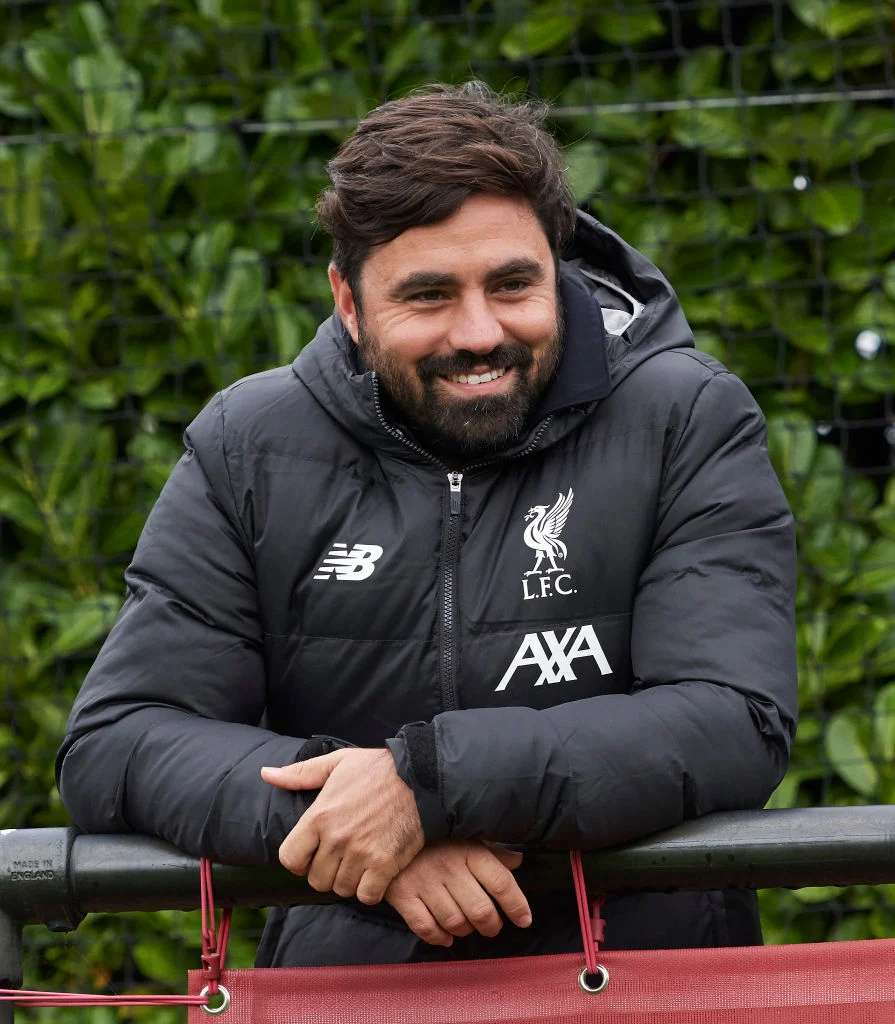
Vítor Matos, Certified Trainer and speaker at our Congresses, chats with us about the importance of Tactical Periodization® in Youth Football/Soccer.
TP: Your experience in Youth Football/Soccer is well known, what do you think about the use of Tactical Periodization® in that regard?
Vítor Matos: Tactical Periodization® brings us closer to the essence of the game. Fundamentally because it is a methodology that trains the game. With the game. With our way of playing, the one that the coach wants. At the same time, it also allows us to look at what reality is and experience it and intervene on it in a different way. And the fact that we recognize the true essence of the game and the fact that Tactical Periodization® brings us closer to that, allows us to continue to grow.
TP: For example, what existed in the Youth Department of FC Porto that players like Ruben Neves, Diogo Costa, Diogo Dalot, João Félix etc., appeared?
Vítor Matos: There was a well-defined and coherent Game Idea and Methodological Matrix, and it was a project with a development logic that sought to differentiate FC Porto teams from the others. The big challenge or the big challenges were for us to develop a quality way of playing, which is related to what the project was, and to enhance the player’s individual talent.
How? Fundamentally, through a game idea adjusted to the singularities, or characteristics, of the players. At the same time, game principles are developed as an interaction criteria. In other words, more than behaviors, more than us arriving and saying “this is how it’s done”, we create the context for them to decide, interact and become selective in function of something. As Professor Vítor Frade likes to say: “give them the title and they will do the writing”.
Another way is to create contexts for collective overcoming. What normally happens is that players solve the problems they encounter individually. But this individual way of doing it always has to be thought of in terms of what context(?). Is it a context that makes them collective, or is it an isolated individual context?
Another concern is the stimulation of a culture of collective appreciation. That is, for example, managing agents, parents and their expectations, friends, the public, and at the same time being coherent with the process. In other words, the way we lead training, the way we intervene, the way we make a substitution in the game, must always be consistent with what we are talking about. That is, how do we, in these moments, pull the player and the team towards the collective side. Because for me, enhancing talent means giving it the conditions to play. Because what a lot of people think is that being collective takes away individual quality, which emasculates the player. No, it’s exactly the opposite. The individual emerges according to a collective logic and that is where it will stand out because otherwise it will not succeed.
You mentioned the case of Ruben Neves, everything he does is with collective intention, be it a pass, a tackle, the way he places the ball depending on what is going to happen next, short or long, whether in England or in another context, a shot inside or outside the box. It’s all with intention, the technical gesture, if you want to call it that, is done with a collective intention.
Become a PT Membership PRO and have access to this Vítor Matos’ Congress Intervention and free access to this year’s Congress.